 Bluefoot Diary中文
How to practise note reading: clefs, note names and accidentals
Read the clef, locate the note on a line or space, then check its accidental. Start with one range so you can see which part of reading causes mistakes before mixing every clef and accidental.
Start with natural notes in treble clef
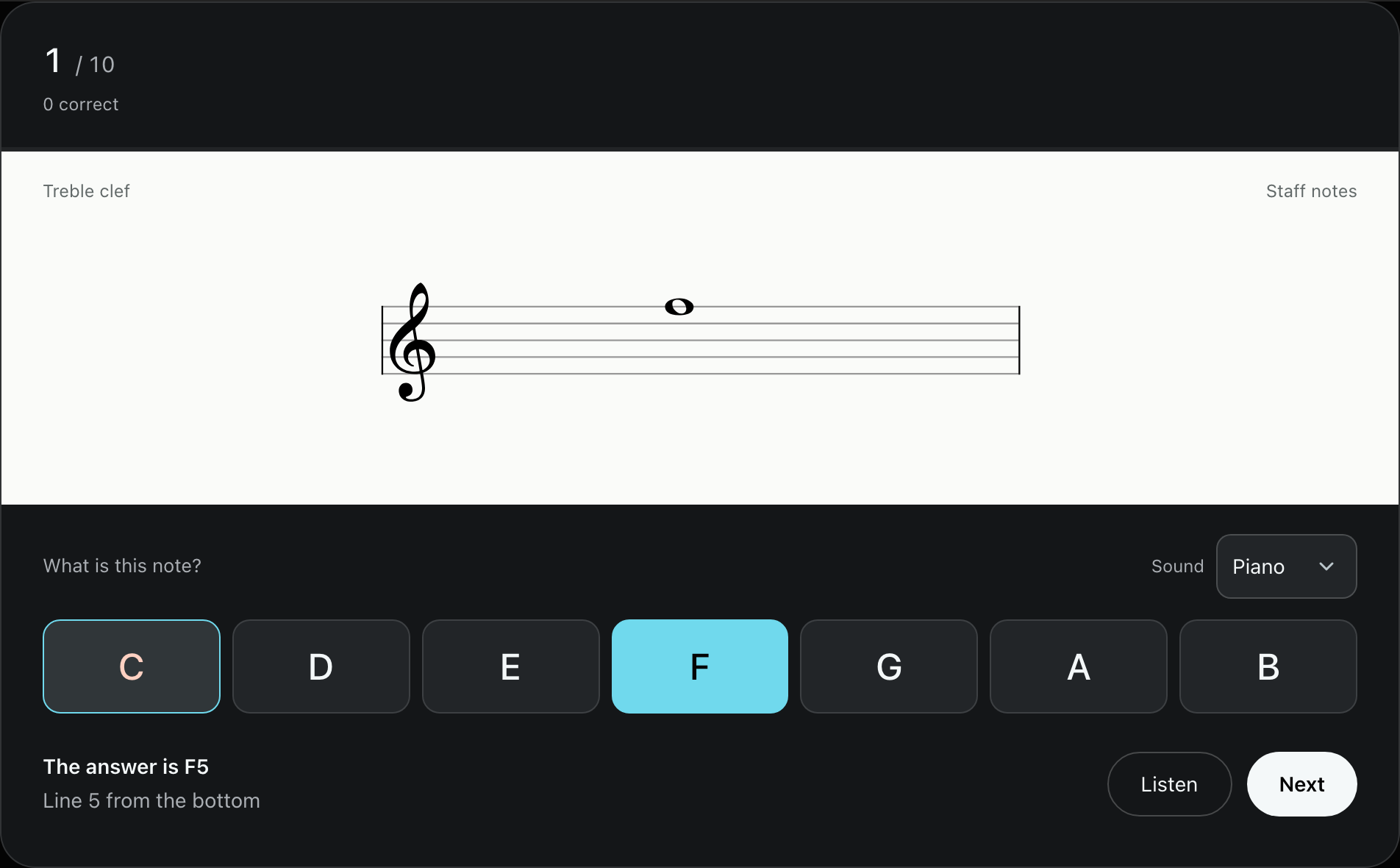
Open note-reading practice, choose Settings, then select treble clef, staff notes and naturals. Apply starts a fresh ten-question round.
Use a familiar landmark: G is on the second line of the treble staff, and F is on the fourth line of the bass staff. Moving to the next line or space moves one letter through the repeating A–G sequence. Count from a nearby landmark rather than always counting from the bottom of the staff.
How do you read treble and bass staff lines and spaces?
Read this table from bottom to top. Five lines enclose four spaces. Check the clef, then whether the note sits on a line or in a space. These are natural notes; check accidentals separately.
| Clef | Five lines, bottom → top | Four spaces, bottom → top |
|---|---|---|
| Treble | E4 · G4 · B4 · D5 · F5 | F4 · A4 · C5 · E5 |
| Bass | G2 · B2 · D3 · F3 · A3 | A2 · C3 · E3 · G3 |
The third space is C5 in treble but E3 in bass. The same position does not mean the same note in both clefs. Practise each clef separately before selecting mixed clefs.
Answer the written name, including its accidental
- Check whether the clef is treble or bass.
- Read the letter name, then check for a sharp or flat before the note.
- Choose the answer and submit. Read the feedback before listening to the reference pitch.
A sharp attached to C is C♯; a flat attached to D is D♭. These can use the same piano key in equal temperament, but this exercise checks the written spelling, so those answers are not interchangeable. You need the letter and accidental, not an octave number.
Listening after answering helps connect notation to sound without turning the task into a pitch-guessing exercise. The keyboard in the piano chord guide can also help you compare pitch positions.
Let your mistakes choose the next round
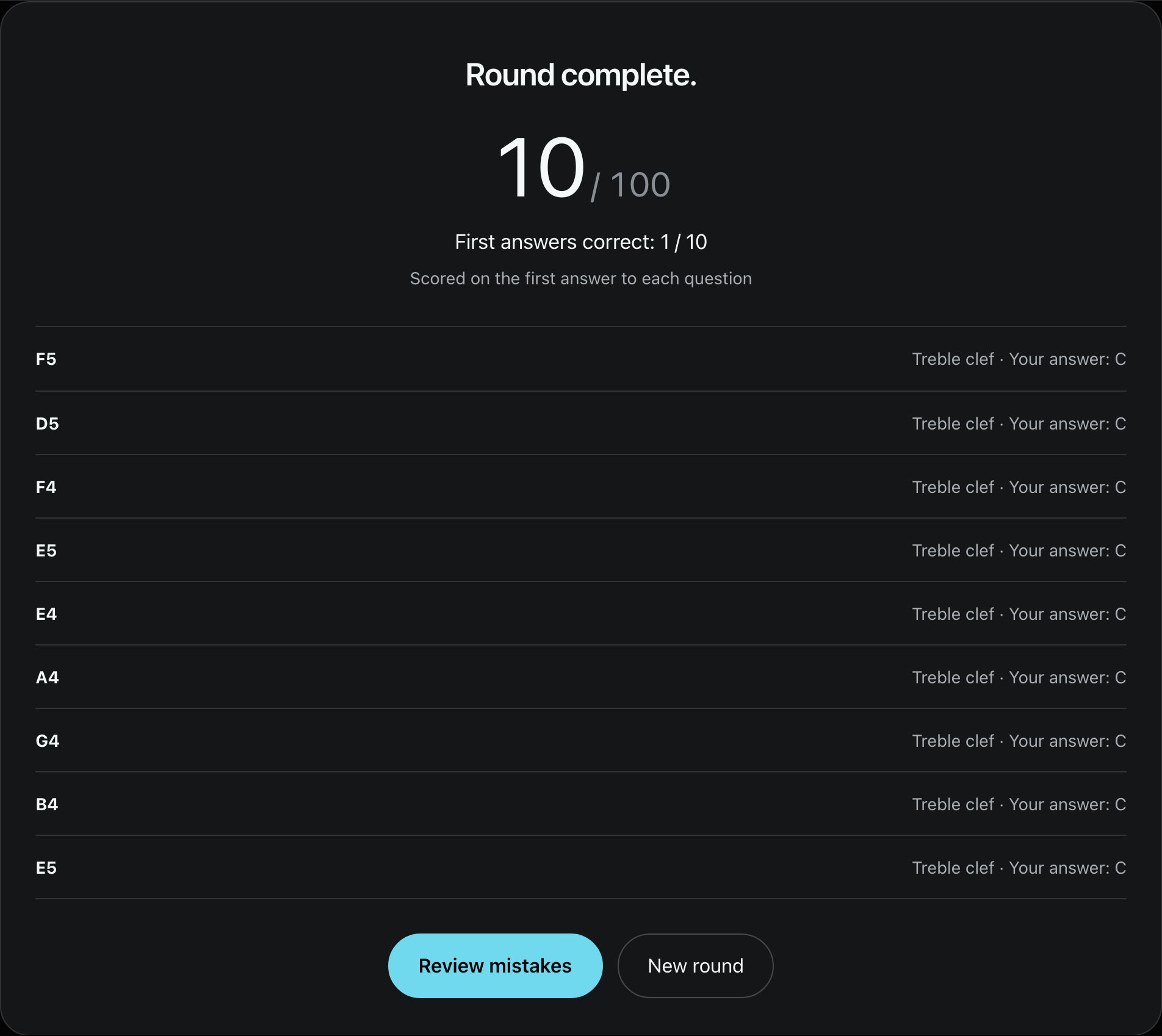
After ten questions, open the result and mistake review. The first answer to each question counts toward the score; reviewing an error does not replace that first attempt.
| Repeated mistake | Try next |
|---|---|
| Wrong natural note | Keep the same clef and staff range |
| Right letter, wrong accidental | Add just one kind of accidental |
| Wrong ledger-line position | Practise ledger lines using a nearby landmark |
| Confusion after a clef change | Separate treble and bass before mixing them |
Change one condition at a time. A reload does not retain the round’s history. To review away from the screen, print blank staff paper and write out a few missed notes.
Move from single notes to a short phrase
Once you recognise individual notes reliably, take a short passage from your music: name its notes, find the keys, then connect them at a manageable tempo. Follow the basic metronome setup when you need a steady pulse.
This exercise checks single-note recognition, not fingering, rhythm or a whole score’s key signatures. The staff range is E4–F5 in treble and G2–A3 in bass; ledger-line mode extends these to C4–A5 and E2–C4. Choose the range relevant to the passage you are learning.
Common questions
Why can the right piano key still be marked wrong?
The exercise distinguishes spellings such as C♯ and D♭. Read the letter from its staff position first, then add the accidental, rather than answering from the keyboard position alone.
Does the reference instrument change the answer?
No. Piano and cello are reference sounds; the written note determines the answer. The cello reference range is C2–C5. Keep reading the displayed clef and note rather than relying on timbre.